


La Carbonera Valley vs. Cocora Valley: An Honest Comparison for Salento Travelers


Carbonera Valley vs. Cocora Valley: An Honest Comparison for Salento Travelers If you’re planning a trip to Salento, Colombia, you’ve probably already added Cocora Valley to your list. It’s famous for good reason: towering wax palms, dramatic Andean scenery, and a hike that ends up on every “best of Colombia” itinerary. But a growing number of travelers are asking the same question once they arrive in town: is there a quieter alternative?
The answer is La Carbonera Valley, also known locally as Tochecito. Here’s an honest, side-by-side look at how the two compare, so you can decide which one fits your trip — or whether you have time for both.
Crowds and Atmosphere
Cocora Valley is one of the most visited natural attractions in Colombia’s Coffee Region, and during high season the main trail can feel more like a queue than a hike, especially near the most photogenic palm groves. La Carbonera sits further off the main tourist circuit, reachable only by 4x4 vehicle, which naturally limits how many people visit on any given day. If solitude and quiet trails matter more to you than convenience, this is the biggest difference between the two.
La Carbonera Valley vs. Cocora Valley: Wax Palm Scenery
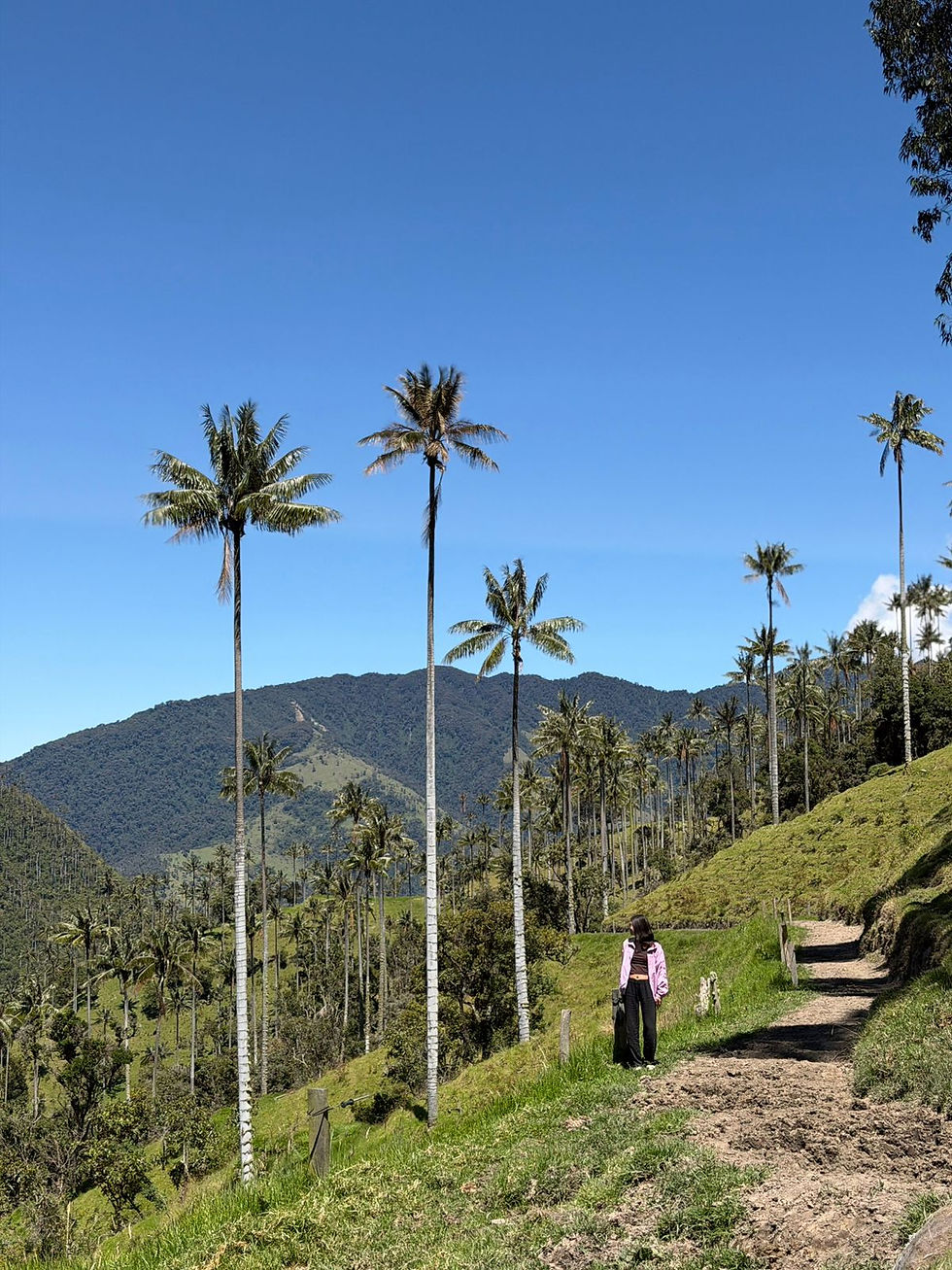
Both valleys protect the Quindío wax palm, Colombia’s national tree and the tallest palm species in the world. Cocora’s palms are arranged along an open, walkable loop that makes for some of the most recognizable photos in the country. La Carbonera’s forest is denser and less manicured, with palms growing across a wider, wilder stretch of cloud forest, giving the area a more untouched feel.
Difficulty and Duration
Cocora’s main loop typically takes 4 to 6 hours and can be walked independently, with options to shorten or extend the route depending on your fitness level. La Carbonera is a full-day commitment — generally around 7 hours including transportation — and combines a guided hike through pine forest, a waterfall crossing, and a climb to a mountaintop viewpoint above 3,300 meters before reaching the wax palm area. It’s a more demanding day, but it covers more varied terrain.
Accessibility: Self-Guided vs. Guided
La Carbonera Valley vs. Cocora Valley: This is where the two destinations diverge the most. Cocora is easy to reach on your own: a short Willys jeep ride from Salento’s main square drops you right at the trailhead, and the path is well marked. La Carbonera is not set up for independent travel. The access road requires a 4x4 vehicle, and a local guide is necessary to navigate the route safely, which is why it’s typically visited as part of an organized tour.
Price and What’s Included
A self-guided visit to Cocora mainly costs the jeep fare plus optional entrance fees to private reserves along the trail. La Carbonera tours are priced as a complete package, generally including 4x4 transportation, a guide, the hike itself, lunch, and entrance fees — which makes the upfront cost higher but removes the guesswork of planning logistics yourself.
Which One Should You Choose?
If this is your only day in Salento and you want the classic, iconic Colombia photo with minimal planning, Cocora is still the right call. If you’ve already done Cocora on a previous trip, or you’d rather trade a bit of convenience for a quieter, more immersive day in the cloud forest, La Carbonera is worth the extra effort.
Can You Visit Both?
Yes, and many travelers do exactly that. A common pattern is to hike Cocora on one day and La Carbonera on another, since the two experiences are different enough that they don’t feel repetitive. If your schedule only allows one, base your choice on how much you value crowd-free trails versus convenience.
Ready to see the difference for yourself? Book your La Carbonera Valley tour here.


Comments